

Boise Eye Doctors You Can Count On.
Welcome to Eyecare Associates of Boise, formerly known as Eastgate Optical, your trusted optometrist office in the heart of Boise, ID. Our team is dedicated to providing top-notch eye care services to help you see the world more clearly. Schedule your appointment today and let us take care of your precious eyesight.
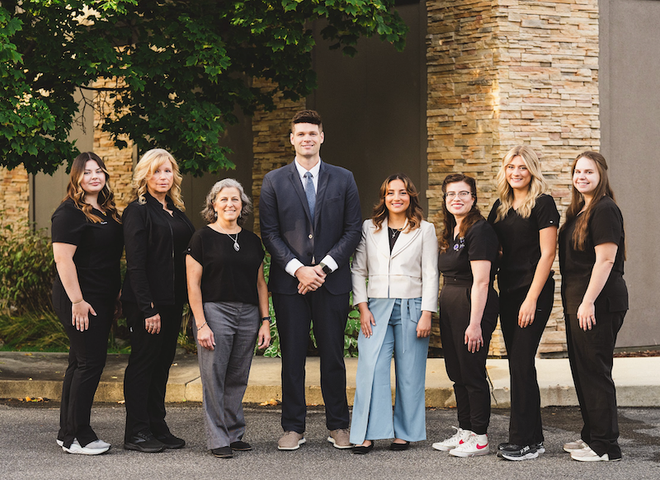
Experience the Difference at Eyecare Associates of Boise
Personal attention is our focus at Eyecare Associates of Boise. We are a family optometry practice that prides itself on the individual care and attention we provide for all of our patients. Dr. Shipton, your trusted optometrist in Boise, and the entire team are ready to meet you and your family and help you with your eye care needs!
Our goal is to serve our patients by helping them with their personal eye health and providing them with professional and state-of-the-art eye care. We believe that healthy eyesight is vital to a high quality of life - both of which we are committed to.
We look forward to meeting you. Call to See a Doctor Today.
Meet Our Doctors
With over 30 years of experience, Eyecare Associates of Boise's incredible team of eye doctors and staff are ready to partner with you and your family for all your eye health and vision needs.
Designer Eyewear
When it comes to glasses, finding the right pair matters. At Eyecare Associates of Boise, we offer personalized assistance with frame selection to make sure you find exactly what you're looking for. And with the extensive collection of designer brands in our boutique, we know you'll find that perfect pair!
Eye Care Services
We provide a wide range of eye care services in Boise for people of all ages. Our state-of-the-art office is equipped to provide your entire family with the highest quality eye care in Boise. Icing on the cake? We have the best designer frame selection too!
TESTIMONIALS
We Love Hearing From Our Eye Care Patients.
"The doctors are exceptional"

"Eyecare Associates of Boise provides excellent vision care. The doctors are exceptional. They are up-to-date on the most current equipment, tests, eye diagnoses and have a very large selection of prescription glasses. The staff are knowledgeable, pleasant and caring. The office is attractive, clean and parking is so easy. I trust these providers!"
– VK
"So happy I found them"
"I normally do not like change, so when I was scheduled to see the new doctor I was hesitant. Dr. Jacob Shipton, O.D. is amazing! Nothing to be hesitant about. Super informative & talks to you like you are a real person, not just another person to sell something to. The whole staff is super helpful & very kind. So happy I found them years ago & make it so easy to keep coming back to keep my eyes healthy."
– RW
"I am a customer for life"
"A super friendly staff, whom are willing to work with my schedule. An injury to my cornea required immediate evaluation, which the staff accommodated on very short notice. I am a customer for life!"
– BJ
